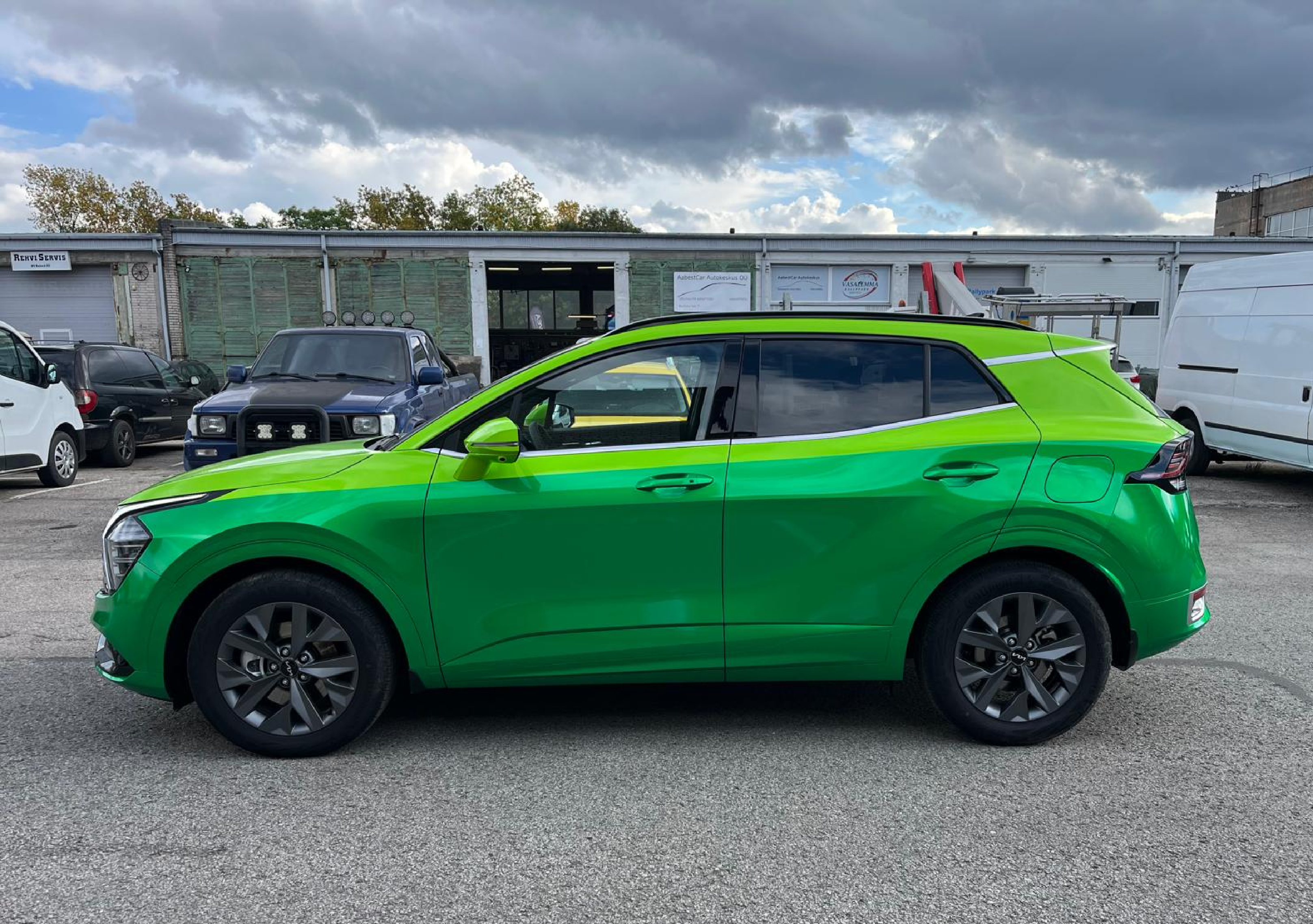
Car wrapping has become increasingly popular in recent years for both new and used vehicles. At the same time, it is still surrounded by several misconceptions that create uncertainty and delay decision-making.
Our everyday experience shows that most doubts come from outdated information or low-quality work people have seen somewhere before. Below, we explain five common myths about car wrapping in a calm and factual way.
Myth 1: A car wrap damages the paint
In reality, the purpose of high-quality paint protection film (especially PPF) is the exact opposite of this common fear - not to damage the vehicle’s original paint, but to protect it.
Protective film acts as a transparent physical barrier that reduces everyday mechanical wear. Stone chips from road conditions, fine micro-scratches, winter salt, and UV radiation affect the protective layer first, not the paint surface itself. As a result, the factory paint remains better preserved, and wear occurs on a removable layer rather than on the vehicle’s original finish.
It is important to understand, however, that the final result depends on the condition of the original surface and the quality of the work. Problems may arise mainly if:
The vehicle has previously been repainted poorly,
The paint layer was already unstable or peeling before installation,
The film is removed using incorrect methods or too aggressively.
In the case of a vehicle with factory paint in good condition, professionally installed and correctly removed protective film does not damage the paint layer. On the contrary, it helps preserve its condition and reduces environmental damage over the longer term.
Myth 2: The film will start bubbling and peeling off
This idea comes from a time when simpler and more rigid materials were used. Modern high-quality car wraps are no longer comparable to the solutions available ten years ago.
Today’s color-change films, including ranges such as Vinyl Frog, are made from flexible polymer materials designed to follow the shape of the bodywork without excessive tension. In addition, adhesive structures with air-release channels are used to direct trapped air out of the adhesive during controlled installation. This reduces the risk of installation errors and enables a smooth, even result.
It is important to understand that the film's durability does not depend solely on the material. The result is mainly affected by:
thorough cleaning and degreasing of the surface before installation,
precise cutting and processing of details,
proper heat treatment, which stabilizes the material and reduces the risk of edge lifting.
If preparation is insufficient or heat treatment is skipped, even a high-quality material may begin to lift at the edges over time. In professionally completed work, the film should not start bubbling or peeling off by itself, but should remain stable throughout its intended service life.
Myth 3: Car wrapping is only for sports cars
Today, car wrapping is used for many different purposes and is no longer associated only with vehicles that have a special or eye-catching appearance.
Car wrapping is used, for example, for:
protecting the paint of a new vehicle immediately after purchase in order to reduce early wear,
preserving the condition of a leased vehicle and helping maintain its resale value,
refreshing the appearance or changing the color without permanent paintwork,
branding company vehicles and creating a consistent visual identity.
Color-change film does not have to mean a bold or aggressive design. Modern materials also include subtle shades and satin or factory-style finishes that suit an everyday vehicle just as naturally as a premium-class car. Many solutions are visually understated, emphasizing the vehicle's shape and details rather than creating an overly distinctive effect.
For this reason, car wrapping is no longer a niche service but a technical and practical solution whose purpose depends on the user’s needs, whether protection, aesthetics, or functionality.
Myth 4: Car wrapping is too expensive
The opinion that it is “too expensive” depends mainly on what the solution is being compared to and what the goal is.
Compared to a full, high-quality paint job, wrapping may be a more flexible solution. Unlike painting, wrap is removable, allowing the original appearance to be restored if needed. This gives the owner greater flexibility, especially if the vehicle is leased or intended for resale.
When compared to potential paint repairs from stone chips, scratches, or wear on the front end, protective film may prove economically sensible. Repairing small defects over time may become more expensive than preventing them in the first place.
It is important to understand that car wrapping is not only about changing appearance. In many cases, it is a practical decision aimed at reducing wear, preserving the original surface, and maintaining the vehicle’s condition for a longer period. That is why the evaluation should be made not only in terms of initial cost, but also in the context of service life and possible future expenses.
Myth 5: Film will not last in the Estonian climate
The Estonian climate presents clear challenges for vehicles. Salted winter roads, constant humidity, significant temperature fluctuations, and summer UV radiation all directly affect both the paint surface and any exterior covering materials.
That is why it is reasonable to ask whether a car wrap can withstand such conditions.
Modern high-quality materials are designed specifically for different climate conditions. For example, Protector PPF films are intended to withstand mechanical stress, such as stone chips, road gravel, and surface wear. At the same time, high-quality color change films such as Vinyl Frog retain their flexibility at both low and high temperatures, reducing the risk of cracking or brittleness.
Still, durability does not depend solely on the material. The result is always influenced by three main components:
the quality of the film used,
the technical quality of the installation,
proper maintenance throughout the period of use.
If the material is suitable and the installation is done professionally, the Estonian climate is not an exceptional challenge for a car wrap, but a manageable environmental factor that can be taken into account.
Conclusion
The myths surrounding car wrapping are mostly related to older technologies, low-quality materials, or poor installation. Generalizations based on isolated negative experiences do not reflect today's technical standards.
Modern car wrapping is a technical service whose quality depends on three main factors: the right material, proper preparation, and professional installation. When these conditions are met, the result is predictable, durable, and fit for purpose.
An informed decision is made when the assessment is based on facts and real information, not on rumors or outdated assumptions. That is how car wrapping becomes a considered choice rather than a risk.